Basics of Soap Making
Simplest version - mix two solutions together, pour into a mold and let harden 24hrs.
One is a water/lye solution and the other is an oil/fats mixture in liquid state.
Colors and scents can also be added but this will be mentioned later.
Steps I take to make soap
1. Make a recipe for soap using the How to Make Soap Calculator (link shown below)Link to a Good Soap Calculator
Step 1 - set weight to 2 lbs
Step 2 - set Lye to NaOH
Step 3 - set superfat to 5%
Step 4 - Set Enter Weight to grams
Step 5 - Play with calculator. Try picking a type of oil with the drop down
and just entering a 1 in for the percent. See the properties that each oil adds
to the soap. After noting the properties make up a recipe for they type of
soap that you would like. Liquid at room temperature oils make soft soaps and
solid at room temperature make harder soaps. After getting a combination you like
adjust the percentages to make 100%. Then click on the calculate button to get
the amounts of water and lye to make the soap. Start out simple.
Step 6 - I measure out the grams of lye needed in a small container and put it
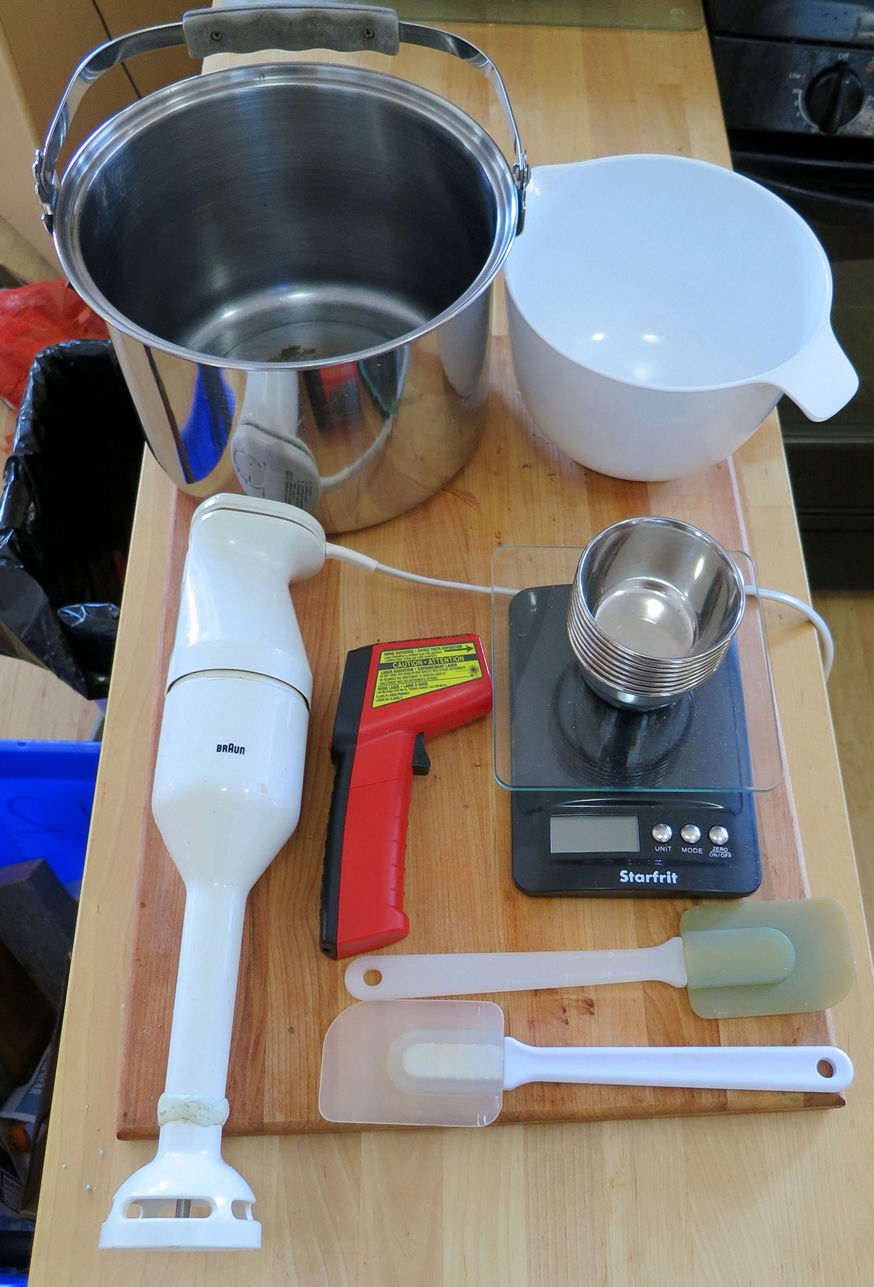
somewhere where I will not disturb it until needed. In a 1 1/2 liter melamine bowl
I measure out the water. For weighing I use a Starfrit digital scale that goes on
sale frequently at Canadian Tire.
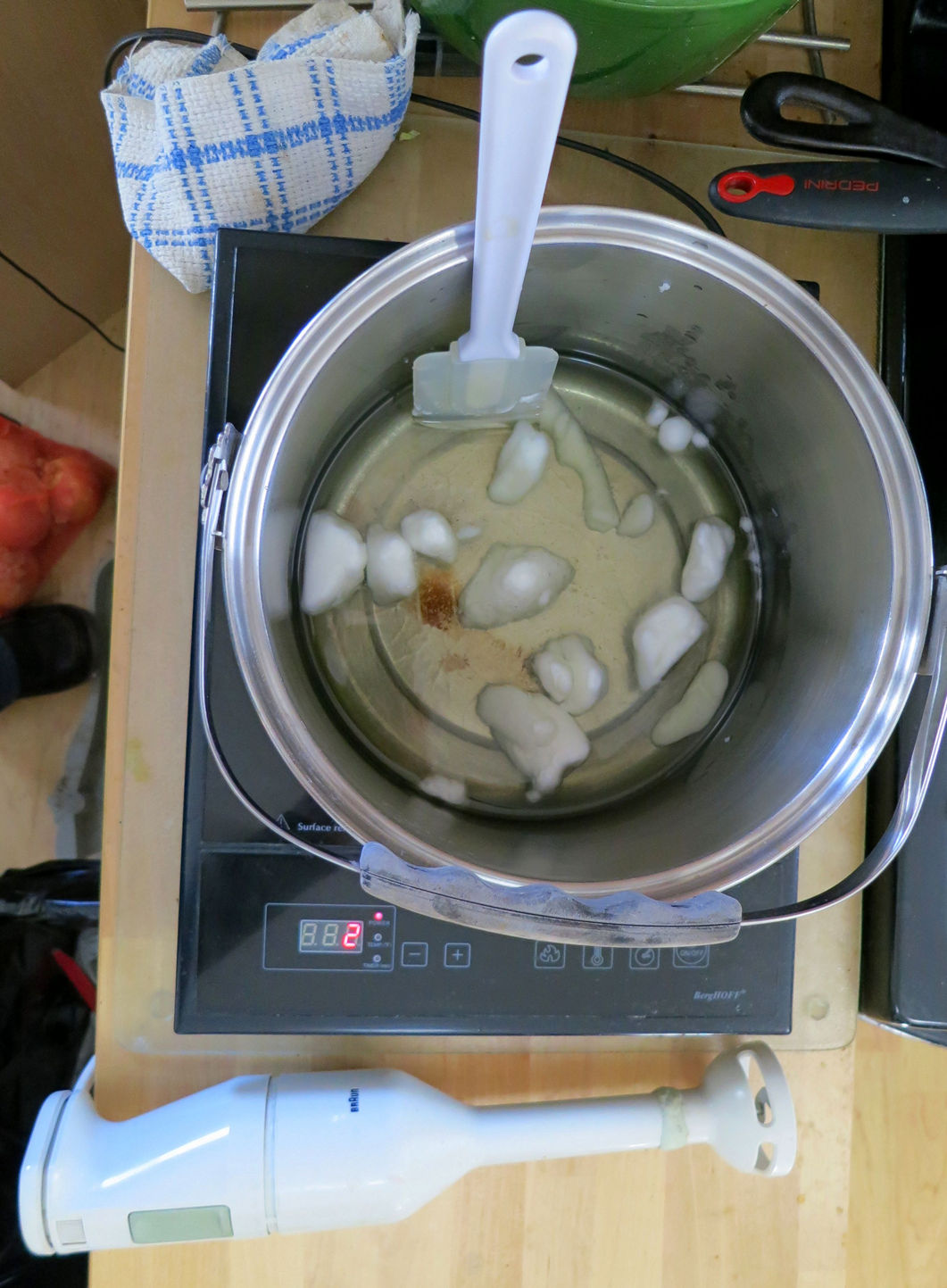
Step 7 - For the oils I use a stainless steel pot ~5 liter capacity that will
work on an induction hot plate I picked up from Costco. I like the induction burner
as it heats up fast and turns off fast. I measure out the solid oils/fats and
put them in the steel pot. I then put the pot on the induction plate on lowest setting
I then measure the liquid oils and pour them into the pot also. Stir occasionally
and take the temperature and keep it around 130-140°F until everything is melted
(if you are making soap with only liquids, just warm them up to 130ish)
Step 8 - Slowly add the lye to the water while gently stirring with a silicone
spatula. Smelly fumes will come off for a bit so keep your distance and it will get hot.
Good idea to wear protective eye cover and gloves!
Step 9 - For temperature taking I use and infrared point and shoot thermometer
They go on sale at Canadian Tire or buy from Amazon. Watch both solutions and wait
till they both get around 125°F. At that point I slowly pour the water/lye
solution into the oil pot while stirring gently.
Step 10 - I like using a handheld blender on a medium low speed to mix but a spatula
will work just fine. Now comes the part that was the hardest for me, stirring
until TRACE which is just a fancy word for it getting like a runny pudding.
While stirring occasionally lift up spatula and let some of the solution drip back
into the pot. If it instantly flows back into the mixture it is not ready yet. If
the drop sits on top of the surface for a bit before slowly sinking in, it's ready.
If you wait too long the solution will get quite thick and be difficult to pour into
your mold. If you pour too soon, you might end up with pockets in the soap where not
all the lye/water has combined with the oil to make soap.
Step 11 - After the soap has traced, you can pour it into your mold. I use lightly
oiled (Pam) silicone bread pans. They are flexible and make it easy to unmold
the soap after. Slowly pour the soap solution into the mold making sure to scrape
all the soap from the pot into the mold. After you can jiggle the mold to level
the top of the soap. You can also use your spatula to smooth down the top. After
smoothing down the soap, you should cover it to keep it warm as the chemical reaction
will continue for a while. I place an old license plate on top of the bread pan and then
drape a couple old towels over everything. Resist the urge to keep on checking the soap.
Step 12 - After about 24 hours you can check the soap. If it is reasonably firm it is
time to unmold. I usually turn the silicone pan upside down on a plastic cutting board
grab one of the ends and try and peel the mold off. Experiment to find the best way.
I then place the loaf of soap top down on the cutting board and let it cure for about
another 12 hours before cutting into bars. Stand the cut bars on edge somewhere and
let them cure for at least a month.
Link to place to get soap making supplies
For regular oils line Olive, Canola, Avocado etc. I usually just pick them up at Costco
For Coconut oil, I usually get it at SaffireBlue as it is cheaper and has no coconut odor
If you want the coconut smell by all means use the oil from Costco. Lye I usually order
from SaffireBlue. Lye is also available at Home Hardware stores (Stonewall or Selkirk)
or if you need some quick, you can pick it up on Marion Street at Di Erbe
A good place to look for a silicone loaf pan and a cheap stick blender is Value Village.
One oil I would definitely pick up is Castor oil. It makes soaps bubbly and creamy
Simple first recipe
Canola Oil - 340.5gCoconut oil - 340.5g
Water - 258.8g
Lye - 101.3g
Some Useful Soap Links
Tools I Use for Making Soap
Coconut oil melting in Canola oil